
S
Orthodox Icon Crucifix Wall Three Bar Cross - Crucifixion of Christ with Angels & "Save and Protect" Perfect size beautiful cross. Glory to Jesus Christ ☦️
Amazing beautiful icon! Very excited to add to my prayer corner.


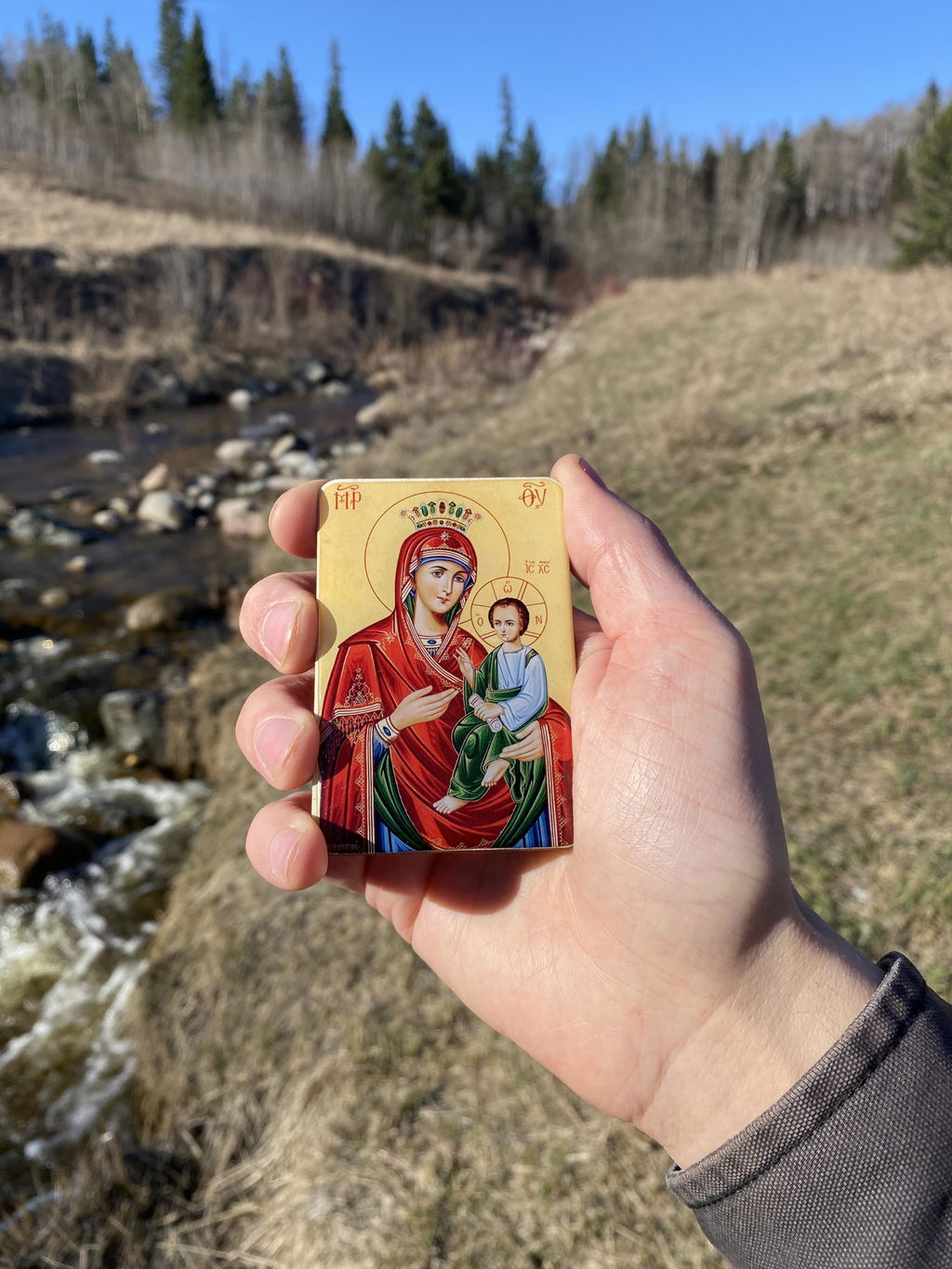
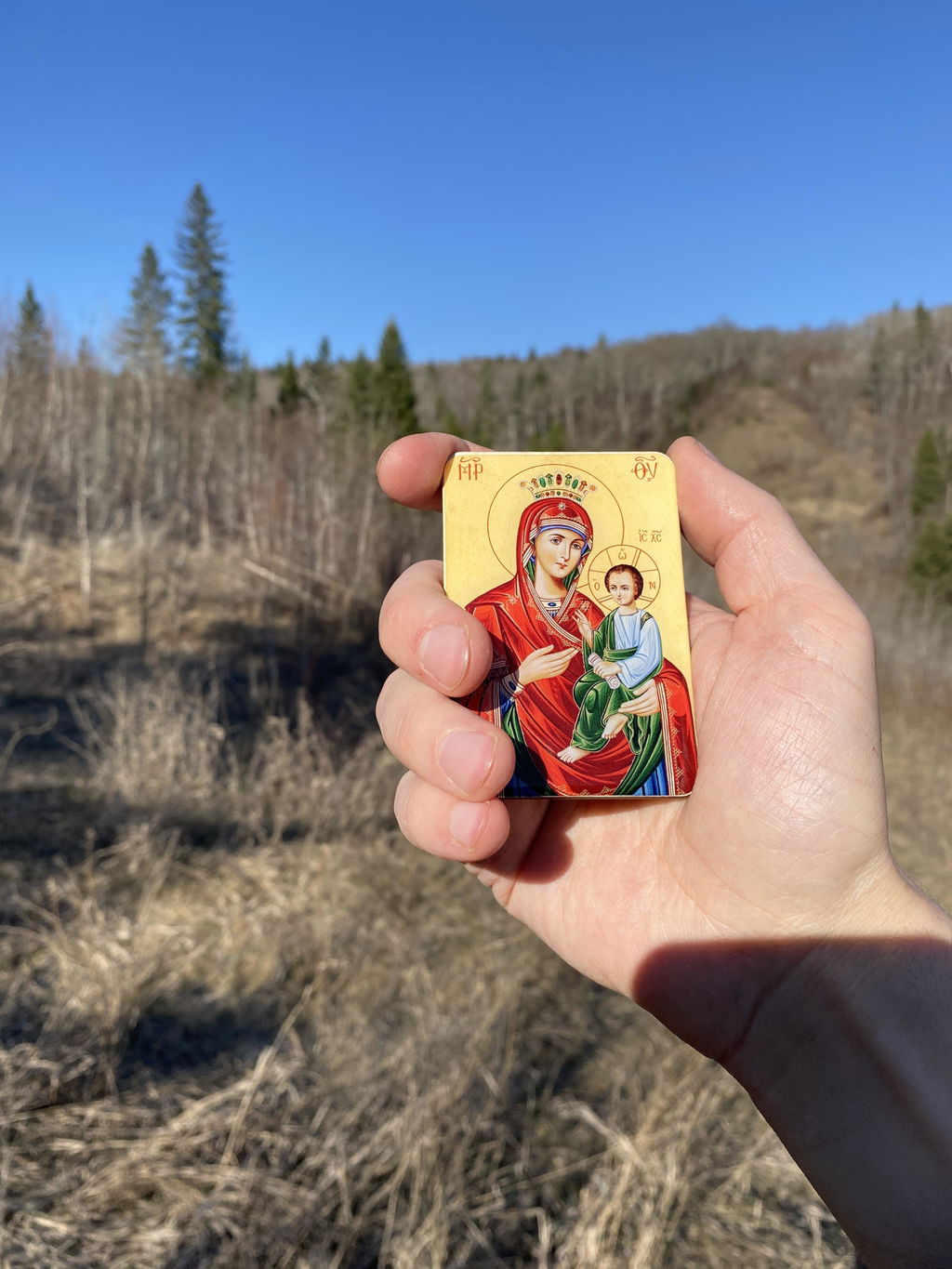
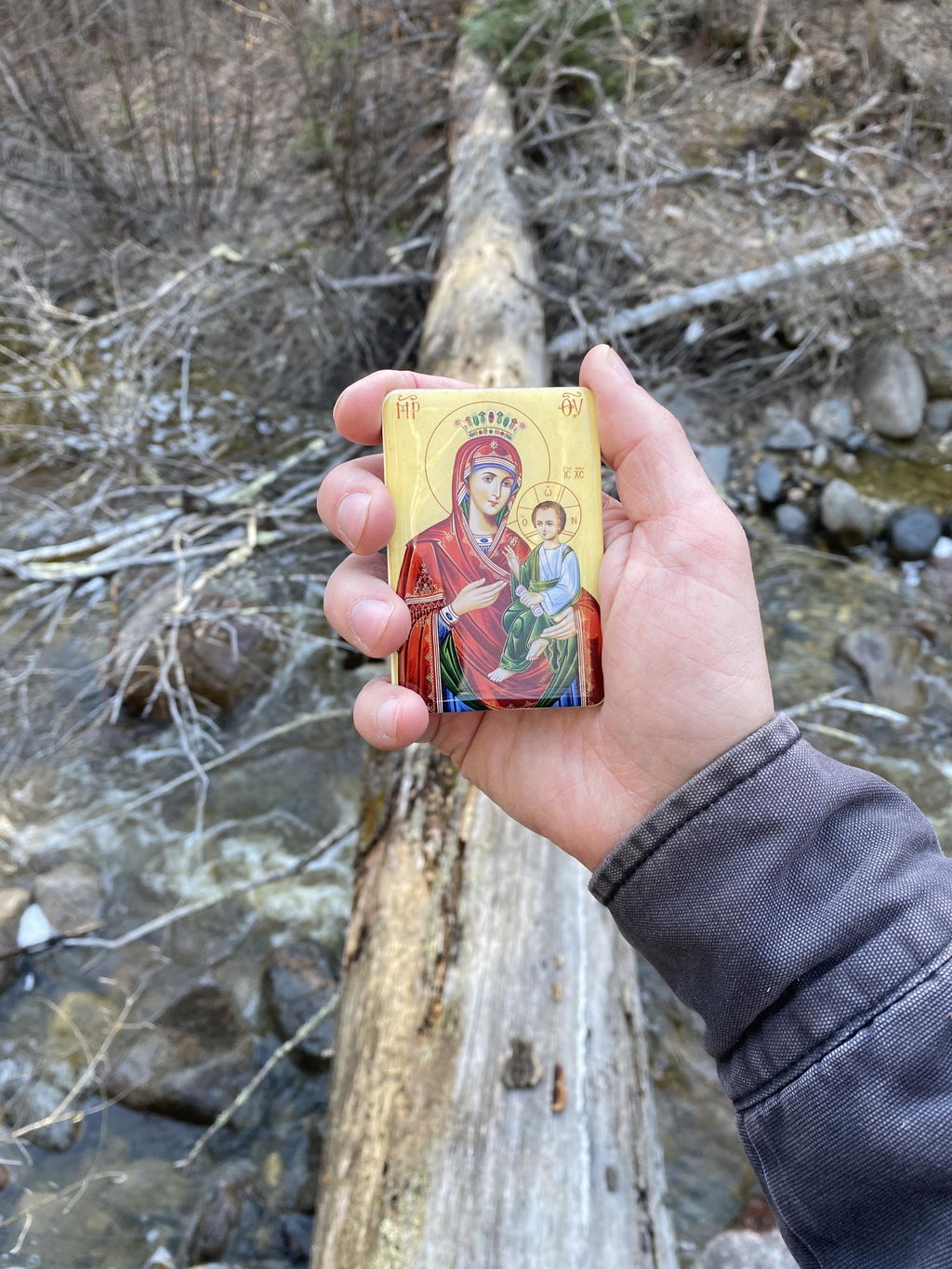
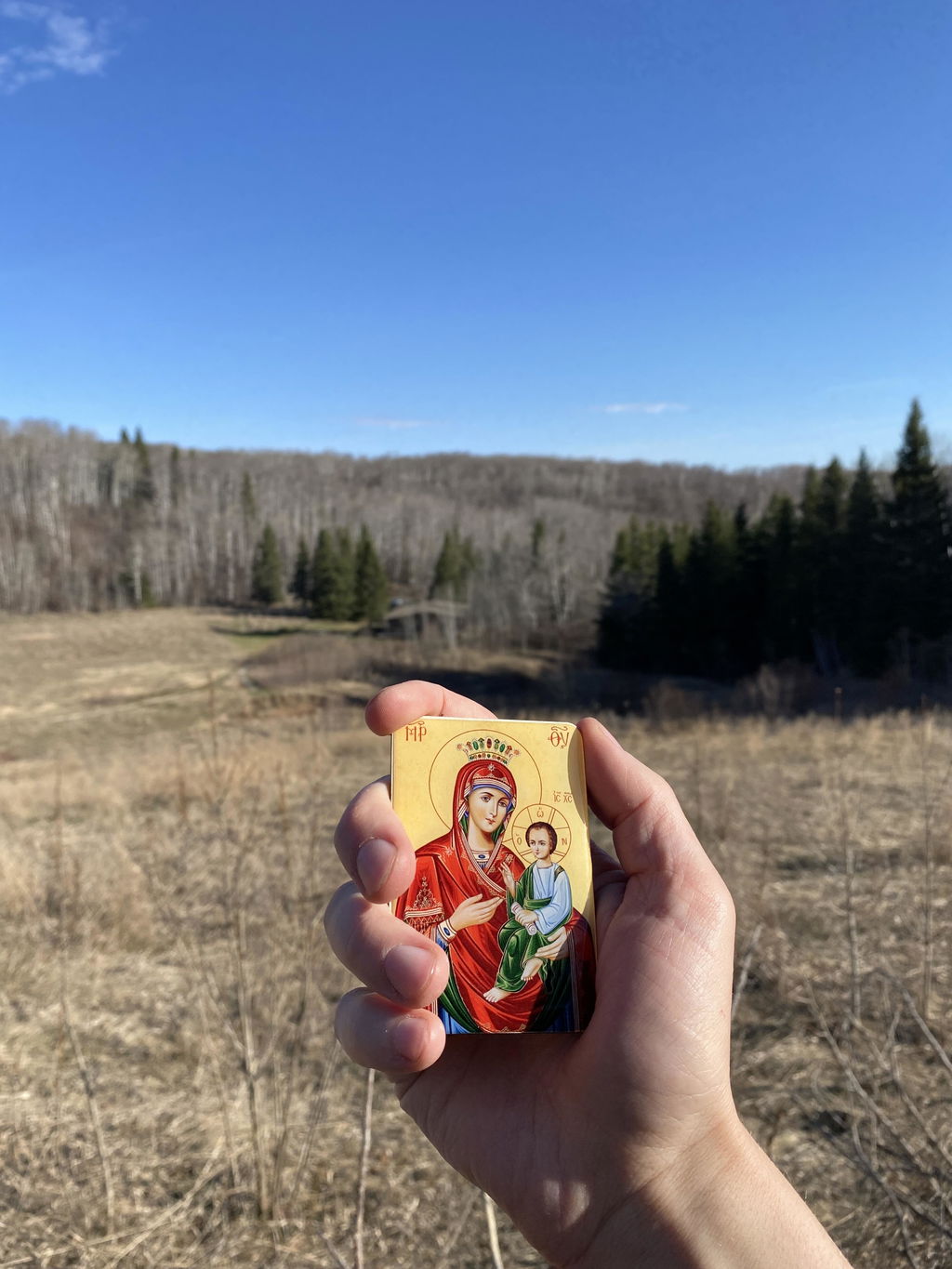
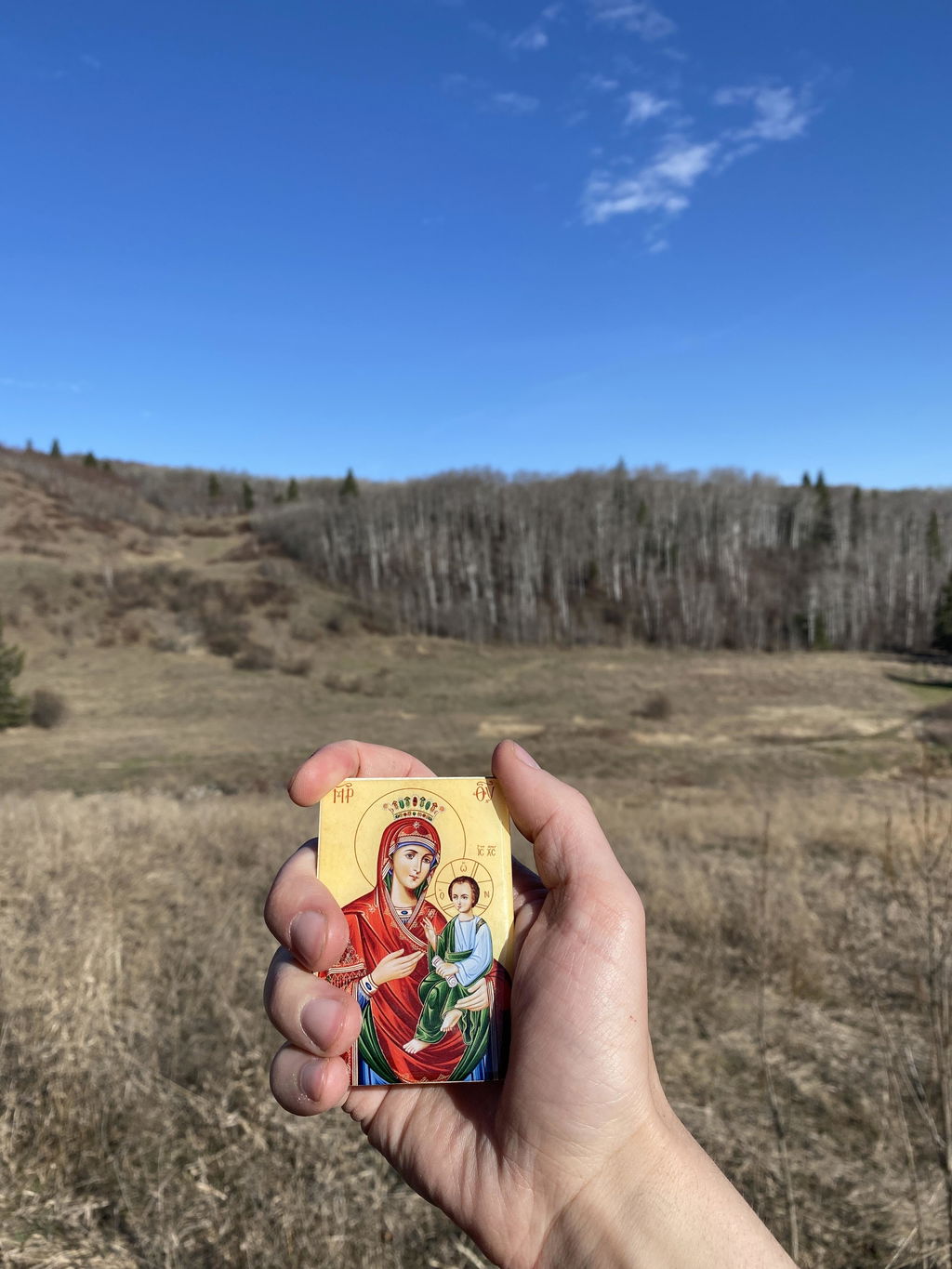
Byzantine style Orthodox small handy size pocket icon of the Mother of God Quick to hear, a copy of the icon that was in Elder Ephraim of Arizona's cell.
Please note that our icons and some other items are hand-crafted and made-to-order. Allow up to 4 weeks for production. If you require your order by a specific date, please contact us prior to placing your order.
Please note that your chosen shipping method does not include production time. (For example, if you select 3 day shipping, your order will be delivered 3 days after it ships, not 3 days after the order is placed.) For shipping options please visit our Shipping Policy page for more information
September 8 Nativity - August 15 Dormition
I love this icon! I need her constantly with me. I bring her in the car when I go for long drives to the grocery store and put her in the sun visor. I keep her in my shirt breast pocket when I take communion and look at her during mass when I put her on the hymn bookshelf in the pew. I need this icon with me throughout the day and night because I can not be given life stability or satisfying sobriety without the Panagia’s help and AA (Daily Reflections). I’m trusting God, the Panagia, Orthodox books, and AA when they warn me that sin (addictions, drugs, and alcohol) only cause isolation, anxiety, and feeling depressed (Daily Reflections). Living without seeing the Panagia ceaselessly is too prideful for me and must be stopped immediately. Or else it will harm my serenity and sobriety. I need daily dialogue with Theotokos to comfort me and heal every one of my wounds of bitterness, of disappointment, and of separation from richer and more successful people. I am grateful to the Panagia. Without Her I would fall into alcoholism, ego, and insanity (Daily Reflections). Purchasing this icon was a financial investment in my faith which will confidently grow a “hundredfold” spiritually (Matthew 19:29).
This icon is helping me love the heart of the Panagia. The more I see Theotokos, the more I contemplate, “pray and converse with God” (which) “is a supreme good: it” (increases my) “partnership and union with God. As the eyes of the body are enlightened when they see light, so our spirit, when it is intent on God (through the icon of the Panagia), is illumined by his infinite light. I do not mean the prayer of outward observance but prayer from the heart, not confined to fixed times or periods but continuous throughout the day and night” (St. John Chrysostom, Supp. Hom. 6 De precatione, in Liturgy of the Hours, vol. II, p. 68-69).
This small Panagia is the perfect materialization of John Chrysostom’s idea who suggests we should always contemplate the Divine. Specifically, “our spirit should be quick to reach out toward God” and the Theotokos, “not only when it is engaged in meditation;” but also “at other times” “when we are “carrying out” our daily “duties, caring for the needy, performing works of charity, (and) giving generously in the service of others, our spirit should long for God” and the Panagia and bring them both to our mind(s) (especially visually) so that our “works may be seasoned with the salt of God's love, and so make a palatable offering to the Lord of the universe” (St. John Chrysostom) (Hom. 6 De precatione, in Liturgy of the Hours, vol. II, p. 69).
Reference: Alcoholics Anonymous World Services. (1990). Daily reflections: A book of reflections by A.A. members for A.A. members
Je suis heureux que cette icône me donne une union spirituelle avec plusieurs chrétiens (ceux du passé, ceux d’aujourd’hui et ceux à venir). Car Placide Deseille et Macaire d'Égypte dit que les croyants deviennent le Corps mystique du Christ. Malgré les différences entre les icônes de la Théotokos, elles ont toutes en commun le fait que c’est la même jeune mère adoptive pour nous tous. Avoir cette icône toujours avec moi honore et donne du respect à notre mère spirituelle dans mon humble contexte. Avoir une icône de la Théotokos toujours avec moi, je crois, fait qu’elle, « la stérile », la vierge Marie, se « réjouit de son enfant » adopté spirituellement (Psautier, Ps. 112, 9, p. 197; Grégoire de Nysse, Traité de la Virginité). Comme mère, sa présence visuelle donne la paix, l’amour et de la joie, dans mon contexte limité. Elle est douce et humble dans son visage et ses vêtements. Dans une main, elle tient Jésus proche de son cœur et dans l’autre, elle ne restreint pas les mains de Jesus ou son papier d’écriture. Je crois qu’elle lui donne une chance de briller. Je crois aussi que la Panagia montre son humilité et son obéissance à Dieu car ses yeux ne voient pas ce que Jésus regarde (ils regardent des points différents). Je pense qu’elle ne sourit pas car elle sait qu’une épée va percer son cœur, et que le Christ et ses enfants adoptés spirituellement vont souffrir aussi. Elle serait aussi triste qu’il y ait des âmes qui ne vont pas être loyales au Christ et qu’elles vont périr. Je crois aussi que cette image montre sa générosité. En montrant Jésus, elle partage son plus grand trésor, son enfant, avec toutes les générations, au moment le plus stable dans sa vie. Si tu regardes, sa main et la main de Jésus font le contour d’où est son cœur (milieu du corps, un peu à gauche). Je crois que cette image est l’une des plus grandes avocates de la dignité et de l’égalité des femmes et des hommes.
Tous les Icônes Théotokos sont des éclaire divine, des illumination divine, et donne de l’amour divine (Macrine de Volos).
Elle te donne une nourriture céleste, t’habille de divinité, te donne des vêtements de gloire, ouvre l’œil de ton cœur, purifie ta conscience de sa culpabilité, purifie ton intellect des mauvaises pensées et donne de la santé à ton corps (Macaire d'Égypte).
Un bon achat pour juste 8 $ ! C'est moins cher que deux cafés ou un déjeuner à Tims, et ça dure toute une vie ! C’est presque en rabais, car son prix n'a pas augmenté par rapport au calcul de l’inflation annuelle.
We thank you for visiting our website, by donating to our Monastery and purchasing our handmade items you support our mission. God bless you!
© 2026, monasterevmc.org Powered by Shopify


Perfect size beautiful cross. Glory to Jesus Christ ☦️
Amazing beautiful icon! Very excited to add to my prayer corner.